


The objective of this programme is to ultimately secure long term tenure rights for the landless and homeless. This programme compliments equitable access to land and resisting evictions, in ensuring that each and every citizen feels safe and secure in what they call home.
Securing tenure is also in response to millions of households that reside in precarious conditions such as informal settlements, overcrowded buildings, backyard structures and occupied buildings. Currently, most of the families living in informal settlements or other forms of occupations are in the limbo of an endless “waiting list” estimated at 2.1 million households nationally. It is currently estimated that with the resources available, it will take over a century to meet the demand, without accounting for any further growth in the number of low-income families requiring state support. A more progressive and radical approach to tenure can shift this thinking to be applied to land and buildings that have been occupied or vacant and underutilised for over twenty years. The ability to secure tenure over the long term has the potential to be a gamechanger for South Africa.
This project began with a question: What is the quickest way to transfer land to people in the South African context?
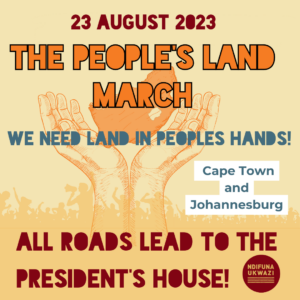 The People’s Land Campaign is a grassroots-led initiative launched in August 2023 to reclaim underutilised state-owned land for the public good. By leveraging the State Land Disposal Act of 1961, an apartheid-era law traditionally used for control; poor and working class communities are now “flipping the script” to demand the transfer of well-located urban land for affordable housing.
The campaign has made significant strides, including securing Presidential approval and the establishment of a high-level interministerial committee to oversee land transfers within two years of being launched.
To date, the project has conducted at least 30 critical assessments of community-identified land parcels, identifying numerous sites suitable for immediate development as part of a broader mission to put land back into the hands of the people.
Read more:
The Langalibalele Project, also referred to as the Langa Sandbag Pilot, is an attempt to operationalise climate justice through sustainable construction.
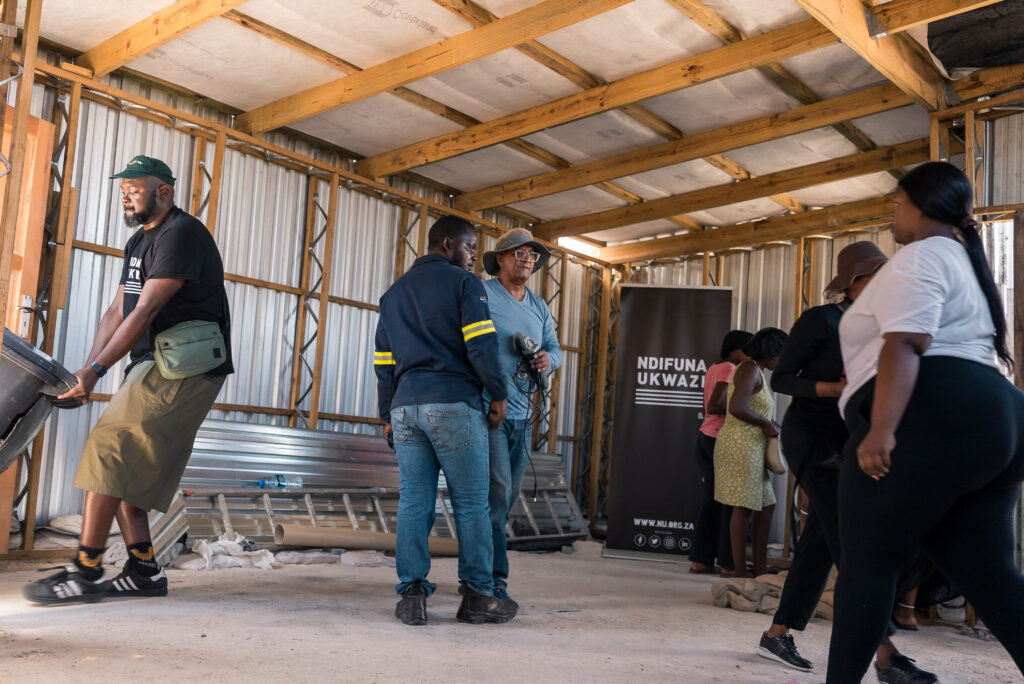
By using locally available materials that provide superior thermal insulation, the pilot demonstrates that low-income housing can be both climate-resilient and community-led.
Despite facing a “regulatory quagmire” from the City of Cape Town regarding unclassified materials, the project serves as a vital prototype for advocating for the legal mainstreaming of Alternative Building Technologies (ABTs).
The project involved the construction of a dignified, low-carbon shelter in Langa using UBU methodology:
About UBU:
 UBU is a South African-based organisation founded by UK architect Barry Lewis that builds sustainable, cost-effective sandbag homes while prioritizing community relationships.
Their sandbag and EcoBeam construction method is thermally efficient, fireproof, bullet resistant, eco-friendly, and up to 40% cheaper than conventional brick housing.
Read more here: https://www.ubu.bz/the-ubu-story
The Security of Tenure Team is exploring a range of legal mechanisms intended to guarantee secure tenure for poor and working-class communities.
While these mechanisms were established to protect tenure rights, many are no longer adequately aligned with current social and economic realities. As a result, the team is advocating for reforms to ensure that these legal frameworks effectively respond to contemporary challenges and advance equitable access to secure tenure.
The team is actively engaged in advocating for the reform of the Prescription Act. The current Act no longer serves its intended purpose effectively, particularly in the context of its duration in its application. Its provisions require amendment to ensure that the law promotes justice, protects vulnerable communities, and reflects South Africa’s constitutional commitment to equitable access to land, housing, and security of tenure in a considerable timeframe.
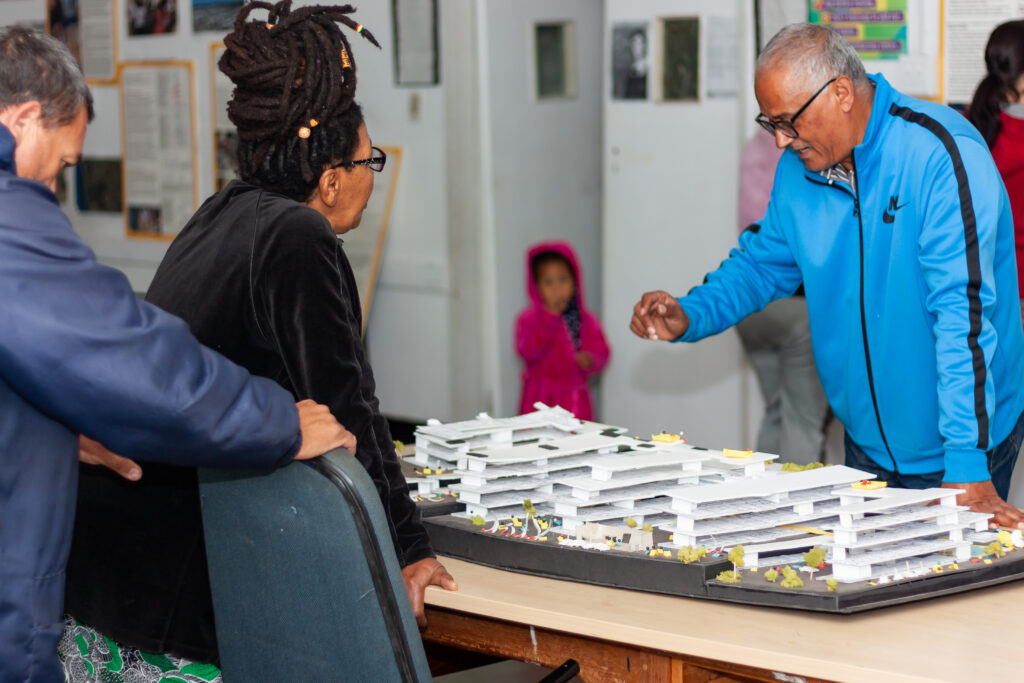
The Co-design project is a collaborative initiative that pairs residents of building occupations with urban planning students and architectural professionals to “co-produce knowledge” about their living spaces.
Primarily focused on sites like Ahmed Kathrada House and Cissie Gool House, the project uses feasibility studies and 3D renderings to make the residents’ vision for their community visible to the public and the state.
By reimagining occupied buildings as inclusive, mixed-income precincts, Co-design provides a technical and political alternative to evictions, proving that it is possible to redevelop well-located land without displacing those who have already made it their home.
The Urban Land Justice Gathering that takes place every alternate year.
It is a platform that brings together activists, scholars, policymakers, and communities to confront the enduring legacy of spatial apartheid.
The Gathering features travelling exhibitions, documentary screenings, and strategic dialogues that centre the lived experiences of those in the struggle for land. It provides a space for marginalised communities to engage directly with high-level officials, ensuring that the demand for spatial justice remains a central priority in the public discourse.
